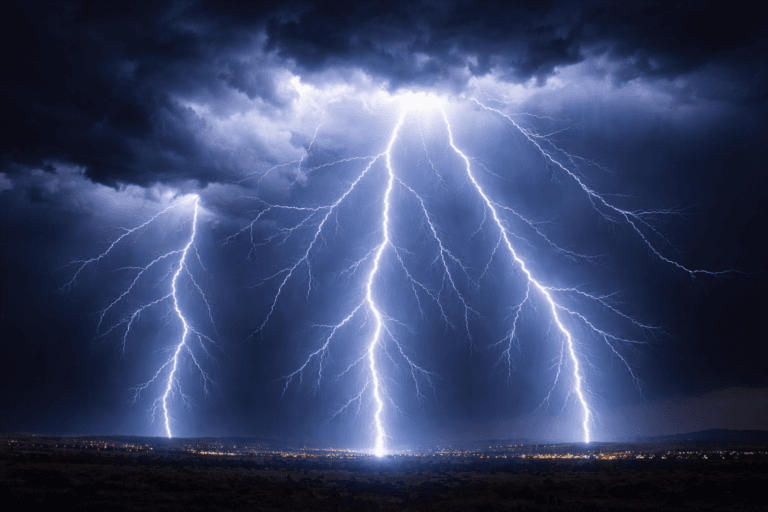
Lightning exists at the crossway of regular weather condition patterns and unforeseen threat. It strikes quickly, brightening the environments before vanishing, yet its effect remains in the type of harmed trees, electrical systems, and injuries. Current improvements in detection innovation allow us to track specific lightning strikes over large locations, revealing formerly concealed patterns. Nonetheless, the method individuals react to storms is typically affected by long-held beliefs that go undisputed. These concepts determine habits in parks, on roadways, at building websites, and within homes, continuing more due to familiarity than accurate proof, as they are given from one storm season to the next.
Why Lightning Myths Persist
Typical misunderstandings about lightning typically come from observable elements like height, noise, and shelter, supplying simplified descriptions for a complicated electrical phenomenon. Some misconceptions are strengthened by coincidence, where safe results are incorrectly viewed as evidence of their credibility. Others stem from out-of-date guidance that has actually lost its context through repeating. With the aid of comprehensive strike mapping, injury tracking, and structural examinations, we can now compare these misconceptions versus real information. Research studies, expose considerable disparities in between common beliefs and real lightning activity.
10 Typical Misconceptions About Lightning
1. Lightning Never Ever Strikes the Very Same Location Two times
This misconception sustains due to the fact that casual observers typically miss out on duplicated strikes. Nevertheless, high structures and structures can be struck several times throughout a single storm or throughout various seasons. Lightning tends to follow steady electrical field conditions around high or well-grounded items, leaving them susceptible whenever conditions are right.
2. Lightning Just Strikes High or Remote Things
While height does increase the possibility of a strike, it does not specify the threat zone. Numerous injuries take place in open locations without close-by structures. When lightning strikes the ground, the electrical current can spread out through the soil, impacting people some range far from the real strike point.
3. Metal Things Bring In Lightning
Metal is typically blamed for drawing in lightning due to its association with electrical energy. Nevertheless, throughout storms, metal does not draw lightning from clouds. The accessory of a strike is identified by the electrical field in between the cloud and the ground. When a strike happens, metal can direct the present along a low-resistance course, which is why metal structures might endure duplicated strikes while surrounding products are harmed.
4. Rubber Soles or Tires Supply Defense
The enormous voltage of lightning far surpasses the insulating abilities of rubber. Shoes do not avoid electrical present from getting in or leaving the body. In automobiles, residents are safeguarded due to the fact that the metal frame directs the present around them and into the ground, while the tires have very little effect on this security.
5. If There’s No Rain, There’s No Risk
Rain is not a trustworthy indication of lightning threat. Thunderstorm anvils can extend far beyond the rain location, bring electrical charges that can lead to ground strikes. Numerous injuries take place under clear skies when rain shows up just in the range, and lightning mapping typically reveals strikes taking place well outside locations of rainfall.
6. Lying Flat Minimizes the Danger of Injury
This belief opposes observed injury patterns. When lightning strikes close by, the present distributes throughout the ground. Lying flat boosts contact with the ground, enabling electrical energy to travel through a bigger location. Cases have actually revealed that direct exposure to ground current can be extreme, even without a direct strike overhead.
7. A Struck Individual threatens to Touch
Issues about recurring electrical energy have actually in some cases postponed aid for victims. Lightning does not leave a charge in the body; victims do not stay amazed after the strike. Medical records suggest that instant contact does not move electrical energy to rescuers, as the threat depends on the preliminary strike, not in subsequent contact.
8. Little Shelters are Safe Since They Supply Cover
Open-sided shelters might appear protective as they obstruct rain and wind, however numerous do not have appropriate grounding systems or enclosed electrical wiring to securely funnel electrical energy. Injuries have actually happened in structures like gazebos and bus shelters that were either straight struck or impacted by close-by ground current. Merely having cover does not ensure electrical security.
9. Indoor Pipes and Devices are Safe Throughout Storms
While structures minimize direct exposure, they do not entirely isolate residents from lightning. Electrical energy can get in through external electrical wiring or pipes linked to the ground, taking a trip through pipelines, faucets, and corded gadgets. Reports of injuries consist of people utilizing wired phones or bathing throughout close-by strikes.
10. Heat Lightning is Safe and Remote
Heat lightning is not an unique phenomenon; it describes routine lightning seen without accompanying thunder. The noise might be soaked up by range or surface. Records reveal that noticeable lightning without thunder can still suggest close-by electrical activity, specifically in big storm systems with extensive discharges.
Note:- Image used is AI generated.