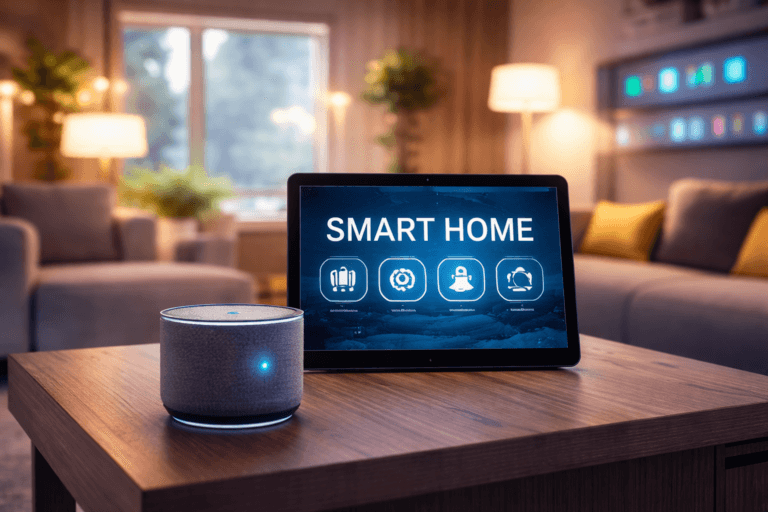
Smart home technology in 2026 is evolving beyond simple connected devices toward fully automated living environments. The focus is shifting from manual control to systems that anticipate and respond to user behavior naturally.
Modern smart homes are designed to learn daily routines and adjust settings automatically. Lighting, climate control, and security systems can now adapt based on occupancy, time of day, and personal preferences without requiring constant input.
Artificial intelligence plays a critical role in this evolution. By analyzing patterns over time, smart home systems can optimize energy usage, improve comfort, and enhance safety. This approach reduces waste while increasing convenience.
Voice assistants are becoming more conversational and context-aware. Instead of responding only to specific commands, they can understand intent and provide proactive suggestions. This makes interactions feel more natural and less technical.
Interoperability is another important development. Devices from different manufacturers are increasingly designed to work together seamlessly. This unified approach simplifies setup and allows users to manage their homes through a single interface.
Privacy and security remain key considerations. Manufacturers are prioritizing local data processing and stronger encryption to protect user information. Transparency and user control are central to building trust in automated systems.
The ultimate goal of smart home technology is invisibility. The best systems operate quietly in the background, enhancing daily life without drawing attention to themselves.
As adoption continues, smart homes are set to become a standard feature rather than a luxury, offering a glimpse into a future where technology adapts effortlessly to human needs.
Read other such interesting post
Next-Generation Laptops and PCs Embrace Built-In Artificial Intelligence